
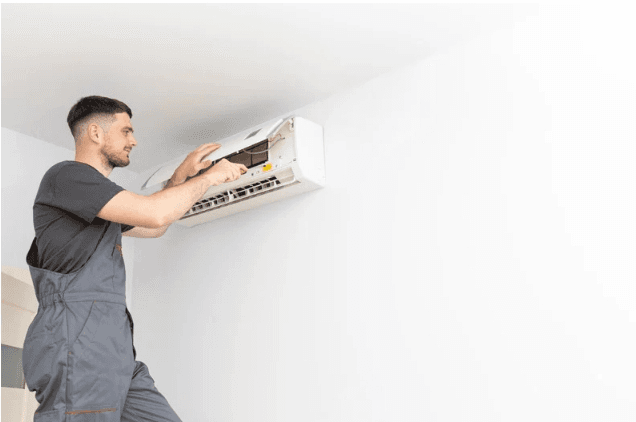
Is your aircon blowing warm air? Then immediate attention is necessary. Usually, although this condition is frustrating, most of the causes can be resolved by proper diagnosis and maintenance.
Therefore, in this article, we will address the primary reasons why your air conditioner is blowing warm air and solutions to fix them.
7 Reasons Your Aircon is Blowing Warm Air
1. Dirty Air Filters or Clogged Coils
The most common cause of warm air from an air conditioner is restricted airflow due to dirty filters or clogged coils. Most of the time, Singapore’s wet environment means that the growth of dust and mold accumulates more rapidly, thereby reducing cooling efficiency.
Notably, unless filters are routinely cleaned out every 1–2 months, airflow to the coils is restricted, forcing the system to work harder and deliver warm air.
To address the problem, clean or replace the air filters periodically. Specifically, for effective cleaning, consider having a professional perform a chemical wash, especially if the deposit is visible on the coils.
2. Incorrect Thermostat Settings
Simple but easily missed is improper thermostat settings. If the thermostat is set to heat instead of cool, or the fan is set to ON rather than AUTO, the air conditioner can circulate warm air.
To address the situation, check the thermostat settings. Importantly, if the thermostat is defective, replace it or get a technician do it.
3. Low Refrigerant
Refrigerant is required to cool, and leaking will significantly reduce efficiency. Low refrigerant symptoms are hissing noises and decreased airflow.
Importantly, low refrigerant cannot be repaired as a DIY endeavor. The refrigerant leak repair should be handled by a licensed professional. Therefore, avoid attempting a DIY repair due to the safety hazards involved. Instead, have a professional locate and repair the leak before recharging the system.
4. Faulty Compressor or Condenser Unit
The compressor compresses the refrigerant, and then the condenser sheds heat outside. Both must be in good condition to cool the system effectively. Notably, the likely causes of faulty compressors are physical damage, overheating, or electrical issues.
To fix the fault, check if the outdoor unit is working. Check the circuit breaker if not. Importantly, if the compressor is physically damaged, have it repaired by a technician.
5. Blocked Evaporator Coils
Clogged coils restrict airflow, rendering them useless. If this is the case, the aircon blows hot air or not at all.
To remove the block in the coils, switch off the unit. Then, clean the coils or arrange for a professional chemical clean.
6. Electrical Issues
Faulty wires, a ruptured capacitor, or physical damage may cause delays in the cooling system. Signs of this are humming sounds, or cyclic operation.
Since it may be dangerous to attempt electrical repairs yourself, it is best to have professional technicians conduct the repairs to avoid potential safety issues. Importantly, routine maintenance keeps problems at bay.
7. Overworked or Undersized Unit
Old units or undersized units are unable to manage extreme heat, resulting in warm airflow.
For enhanced energy efficiency, consider upgrading to a more advanced Aircon. Importantly, ensure the aircon unit size matches your room size.
Conclusion
Warm air from your air conditioner is often due to neglectful maintenance. Therefore, regular servicing and prompt repairs can restore cooling efficiency.
Most importantly, remember that when handling complex issues, always consult an expert to ensure your unit is secure and has a long lifespan. Apart from that, even if you are not a professional, there is a necessity to be knowledgeable and learn more about your air conditioner. The knowledge will help you in making proper decisions for its maintenance.
Lastly, for a reliable aircon service in Singapore, seek a licensed aircon repair and services company with transparent pricing and maintenance contracts.

Add Comment